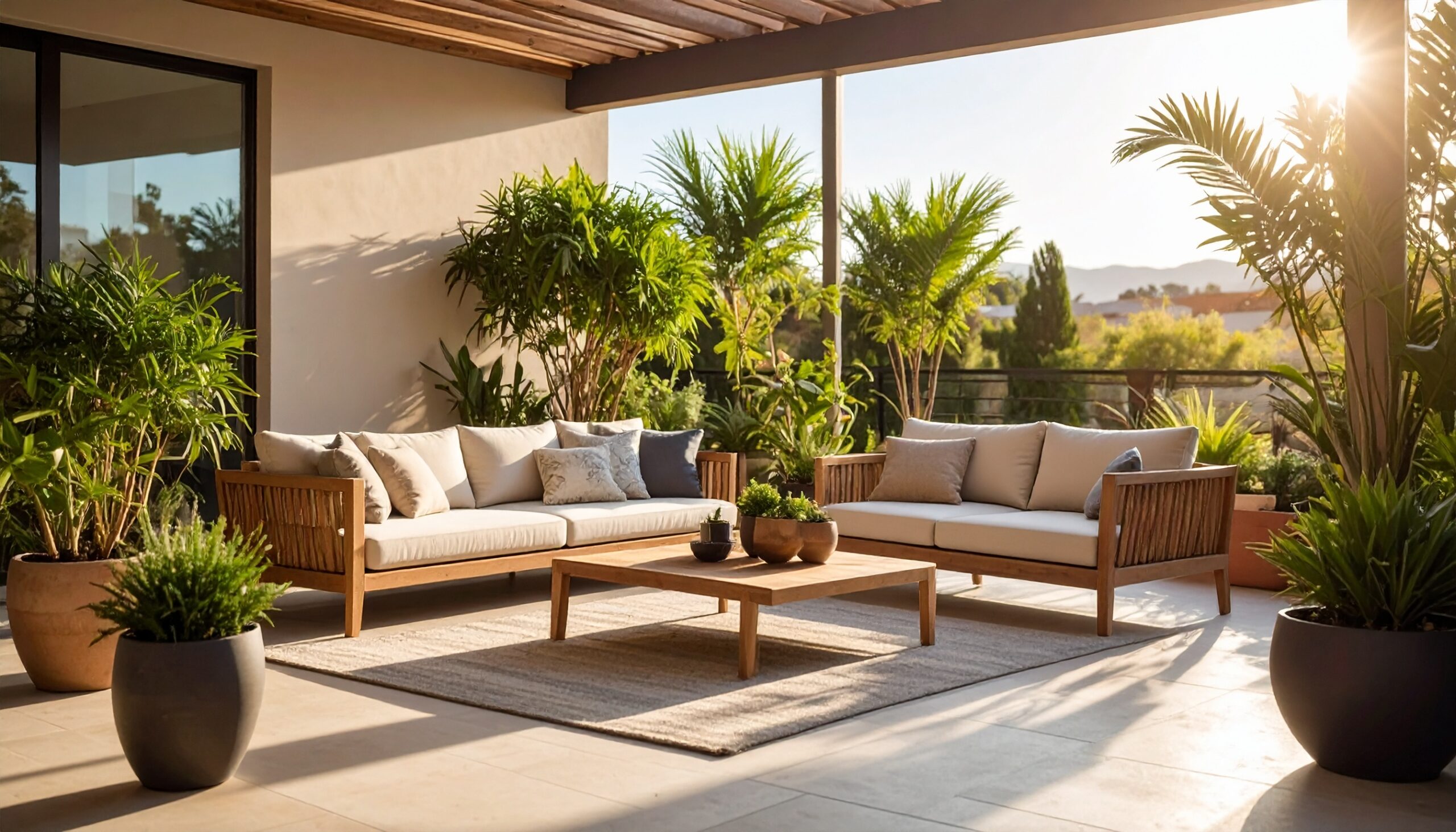
A beautiful outdoor area extends your home and your lifestyle. Whether you have a compact balcony in the city, a wind exposed patio on the coast, or a generous garden in the suburbs, the right furniture plan can transform open air space into a daily living room. This guide walks you step by step through vision, layout, materials, shade, lighting, textiles, care, and budget so you can design a durable and elegant outdoor setting that feels calm, comfortable, and cohesive with your interior style.
Step 1: Define the purpose of your outdoor space
Outcome: a clear brief that shapes every choice.
- Decide the primary function: relaxed lounge, dining with friends, mixed family use, poolside retreat, or quiet reading corner.
- Estimate capacity: daily seating for two to four, entertaining for six to eight, or large gatherings.
- Choose a mood: coastal light and natural, modern resort, urban minimalist, or rustic garden.
- Note constraints: wind direction, coastal air, strong sun, privacy, and noise.
Pro tip: plan for one primary zone that works every day, then add a flexible secondary zone only if space allows.
Step 2: Measure and map circulation
Outcome: furniture fits comfortably and the space feels open.
- Record width and length in centimetres.
- Mark doors, steps, planter boxes, and braai or fire features.
- Allow clear walkways of at least 90 cm around furniture.
- Keep 60 to 70 cm between lounge seating and a coffee table.
- For dining, allow a 100 to 120 cm zone around the table for chairs to move.
Step 3: Choose the right seating format
Outcome: a layout that supports the way you live outdoors.
- Lounge set: two seat sofa plus two armchairs and a coffee table for conversation.
- Modular sectional: configurable pieces for larger patios that can re arrange with seasons.
- Cafe pair: two slim chairs and a small round table for balconies.
- Daybed or chaise pair: poolside relaxation with a small side table for drinks and sunscreen.
- Bench plus chairs: space efficient dining mix that seats children and adults comfortably.
Step 4: Select materials that suit South African climates
Outcome: pieces that look good and last.
- Teak and eucalyptus: naturally oil rich hardwoods that resist weather. Expect a gentle silver patina over time unless sealed.
- Powder coated aluminium: light, rust resistant, and strong. Ideal for coastal regions.
- Galvanised or stainless steel: robust structure for dining bases and slim modern frames.
- All weather wicker in resin: soft texture without moisture concerns. Choose UV stable, high density weave.
- Concrete and fibre cement: sculptural tables and benches with weight and presence. Seal surfaces for stain resistance.
- Ceramic or porcelain tops: scratch and heat resilient for dining and coffee tables.
- Composite boards: stable and low maintenance for benches or table tops.
Coastal note: prefer aluminium or stainless steel frames, marine grade fasteners, and closed cell foam cushions with quick dry cores.
Step 5: Specify outdoor performance fabrics and cushions
Outcome: comfort with resilience.
- Select solution dyed acrylics or polyesters that are UV stable, water repellent, and mildew resistant.
- Choose removable, zipped cushion covers for easy care.
- Quick dry foam or reticulated foam drains fast after rain.
- Light neutrals such as oat, stone, and sand keep temperatures comfortable in sun.
- Add accent cushions in weather safe trims for seasonal colour.
Step 6: Plan a shade strategy
Outcome: usable comfort from midday to sunset.
- Fixed pergola or louvre roof: premium control with adjustable blades for light and ventilation.
- Umbrella: choose a cantilever or centre pole with a heavy base. Look for UV protection and wind vents.
- Sail or awning: span larger areas and soften harsh light.
- Green shade: slim trees, climbers, and tall planters give filtered shade and privacy.
Step 7: Layer outdoor lighting
Outcome: warm ambience and safe night time use.
- Ambient: soft wall lights or overhead strings with warm white lamps around 2700 to 3000 K.
- Task: table lanterns or low glare spots near braai or outdoor kitchen areas.
- Accent: spike lights for planters, step lights on stairs, and a soft wash on feature walls.
- Use solar for remote spots and mains power for key zones. Fit timers or smart controls for convenience.
Step 8: Choose tables and surfaces with purpose
Outcome: every seat has a practical landing place.
- Coffee table: sized roughly two thirds of the main sofa width.
- Side tables: 45 to 55 cm high next to lounge seating for drinks.
- Dining table: 160 to 200 cm length for six, 220 to 260 cm for eight to ten. Round tables 120 to 140 cm seat four to six comfortably.
- Console or service cart: space for platters, ice, and a lamp.
- Fire table: combines warmth and a focal point for evening use.
Step 9: Add planters and greenery for structure
Outcome: enclosure, texture, and seasonal interest.
- Use a trio of planter sizes to create rhythm.
- Choose drought tolerant species for low care.
- Position tall planters to define edges and improve privacy.
- Keep watering and drainage in mind to protect deck surfaces.
Step 10: Set rules for care and protection
Outcome: long life with minimal hassle.
- Cover furniture during long periods of no use and before storms.
- Store cushions in a ventilated deck box when heavy rain is expected.
- Rinse frames regularly in coastal areas to remove salt.
- Re seal timber once or twice a season depending on exposure.
- Clean fabrics with mild soap and water, then air dry fully.
Step 11: Curate a cohesive colour and material palette
Outcome: a calm, high end look.
- Limit the scheme to one wood tone, one metal tone, and one main fabric tone.
- Echo the interior palette for visual continuity between inside and out.
- Use texture for depth: slatted timber, woven wicker, linen look fabrics, and smooth ceramics.
- Keep decor minimal and functional with trays, lanterns, and throws.
Step 12: Create flexible layouts for real life
Outcome: easy hosting and effortless daily use.
- Select pieces that can shift between lounge and dining zones.
- Keep one or two lightweight stools that tuck under a console and add instant seating.
- Use modular sections with corner and armless units to change shape through the year.
Outdoor layout recipes
Balcony 2 by 3 metres
- Bistro table 70 cm round with two slim chairs.
- Narrow bench or storage box along the long side.
- One tall planter for green screening.
- Fold flat umbrella or drop screen for shade and privacy.
Courtyard 3 by 4 metres
- Two seat sofa plus two armchairs facing a 110 to 120 cm coffee table.
- Slim console against the wall with lantern and tray.
- Cantilever umbrella with 50 kg base.
Family deck 4 by 6 metres
- Modular sectional in an L shape around a 130 to 140 cm coffee table.
- Dining table 200 by 100 cm for eight.
- Service cart between zones and a louvre pergola overhead.
Poolside
- Two chaise loungers with adjustable backs and a shared side table.
- Outdoor shower shelf or hook rail for towels.
- Planters with hardy grasses to soften the edge.
Material and finish care guide
- Teak or eucalyptus: clean with a soft brush and mild soap. Allow to silver or oil to maintain richer tone. Sand lightly before re oiling.
- Powder coated aluminium: rinse and wipe with a damp cloth. Check end caps and feet seasonally.
- Steel: ensure galvanised or stainless specification. Touch up chips promptly to prevent corrosion.
- Wicker resin: rinse and soft brush. Avoid harsh chemicals.
- Concrete and fibre cement: seal on schedule and use placemats under hot or oily items.
- Ceramic tops: wipe clean easily, minimal maintenance.
Outdoor textiles and rugs
- Select flat weave or braided polypropylene rugs with drainage.
- Use rug pads for grip and airflow.
- Store rugs during heavy winter to reduce mildew risk.
- Choose cushion inserts that fit firmly to avoid wind flap.
Wind and weather planning
- Anchor umbrellas with specified base weights.
- Choose low profile furniture in high wind zones.
- Consider wind screens or louvre panels to break gusts without blocking light.
- In frost areas, avoid leaving water in planters and cover taps.
Sustainability choices
- Prefer durable materials with serviceable parts over disposable sets.
- Choose timber from responsibly managed sources.
- Collect rainwater for irrigation and select native or climate friendly plants.
- Use LED and solar lighting for efficiency.
Budget tiers and smart saves
- Entry collection: aluminium frame lounge set with acrylic cushions, compact dining for four, umbrella with centre pole.
- Mid collection: teak lounge with quick dry cushions, porcelain top dining, cantilever umbrella, outdoor rug, and lanterns.
- Premium collection: louvre pergola, modular sectional with marine grade fabrics, ceramic or stone tables, integrated lighting, and storage cabinetry.
Save on decor and planters, invest in frames, fabrics, and shade.
Common mistakes and how to avoid them
- Oversized sectionals that block doors and pathways.
- Mixing too many finishes that feel busy and reduce a premium look.
- Skipping shade and then not using the space in summer.
- Using indoor cushions outdoors which leads to mildew and fading.
- Buying low grade steel near the coast without corrosion protection.
Outdoor entertaining checklist
- Side tables for every two seats.
- Lanterns or rechargeable lamps for evening atmosphere.
- Serving tray and console surface near dining.
- Basket with throws for cool nights.
- Wireless speaker placed at low volume away from neighbour boundaries.
Maintenance calendar
Monthly
- Wipe frames, brush cushions, rinse salt in coastal zones.
- Check umbrella fasteners and base.
Seasonal
- Re oil timber where needed.
- Deep clean rugs and cushion covers.
- Inspect feet and glides to protect decks and tiles.
Before summer peak
- Service or clean pergola blades and umbrella fabric.
- Re seal concrete or composite tops if due.
Frequently asked questions
Can outdoor furniture stay out all year
Quality outdoor frames can, but cushions and rugs last much longer with covers and seasonal storage.
What is the best fabric for sun and rain
Solution dyed acrylic and marine grade polyester resist UV and mildew and dry quickly with airflow.
How heavy should an umbrella base be
Follow the maker guide. As a rule, 25 to 30 kg for small centre pole models and 50 kg or more for large cantilever frames.
How do I keep cushions from blowing away
Use ties or hidden clips, choose firmer inserts, and place cushions indoors during high wind warnings.
Why choose Craft City Furniture for the outdoors
Craft City Furniture curates outdoor collections that balance clean modern lines with enduring materials. From teak lounges and aluminium frames to ceramic dining tops and quick dry cushions, every piece is specified for South African conditions. Our team assists with space planning, fabric selection, shade strategy, and seasonal care so your outdoor area becomes a favourite room of the house.